
Last updated September 25, 2026
Free written scope consultation - allowances, timeline, and change-order rules on paper before a single trade is scheduled
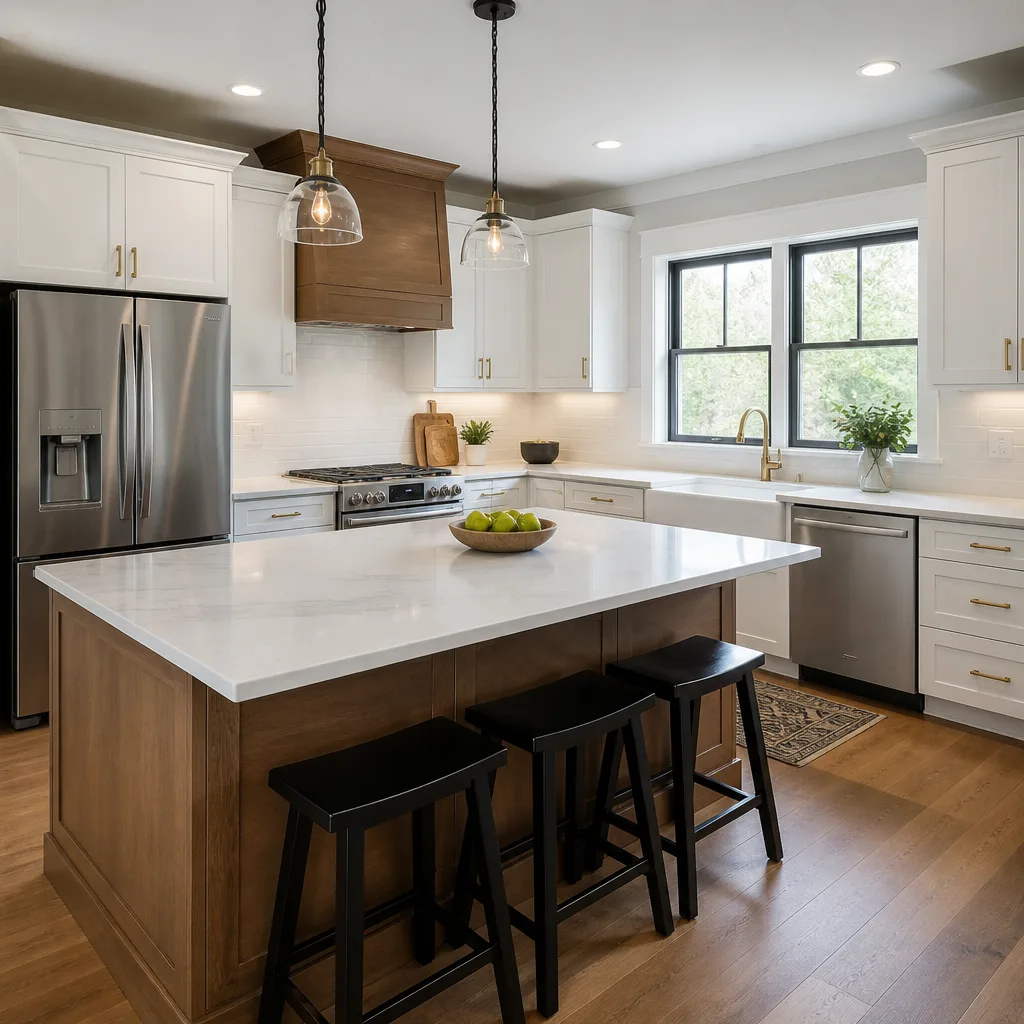
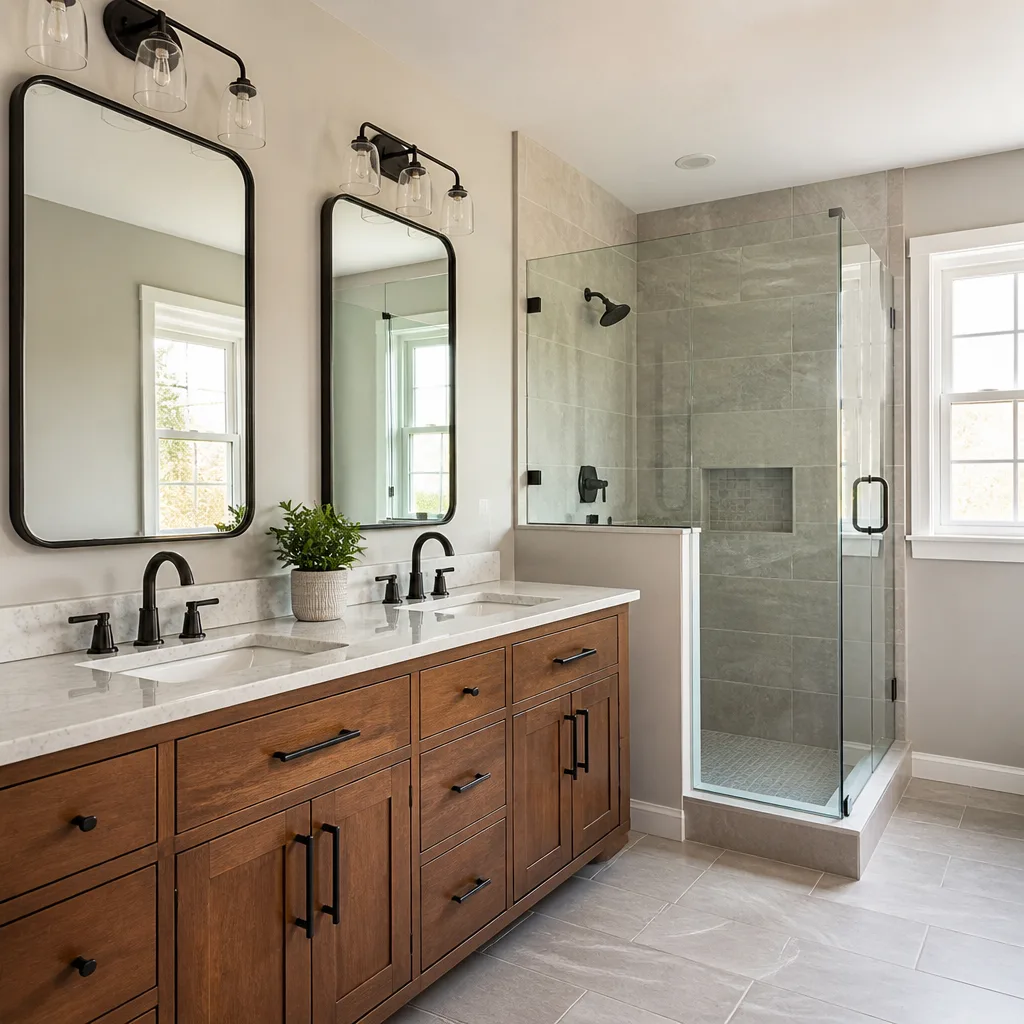
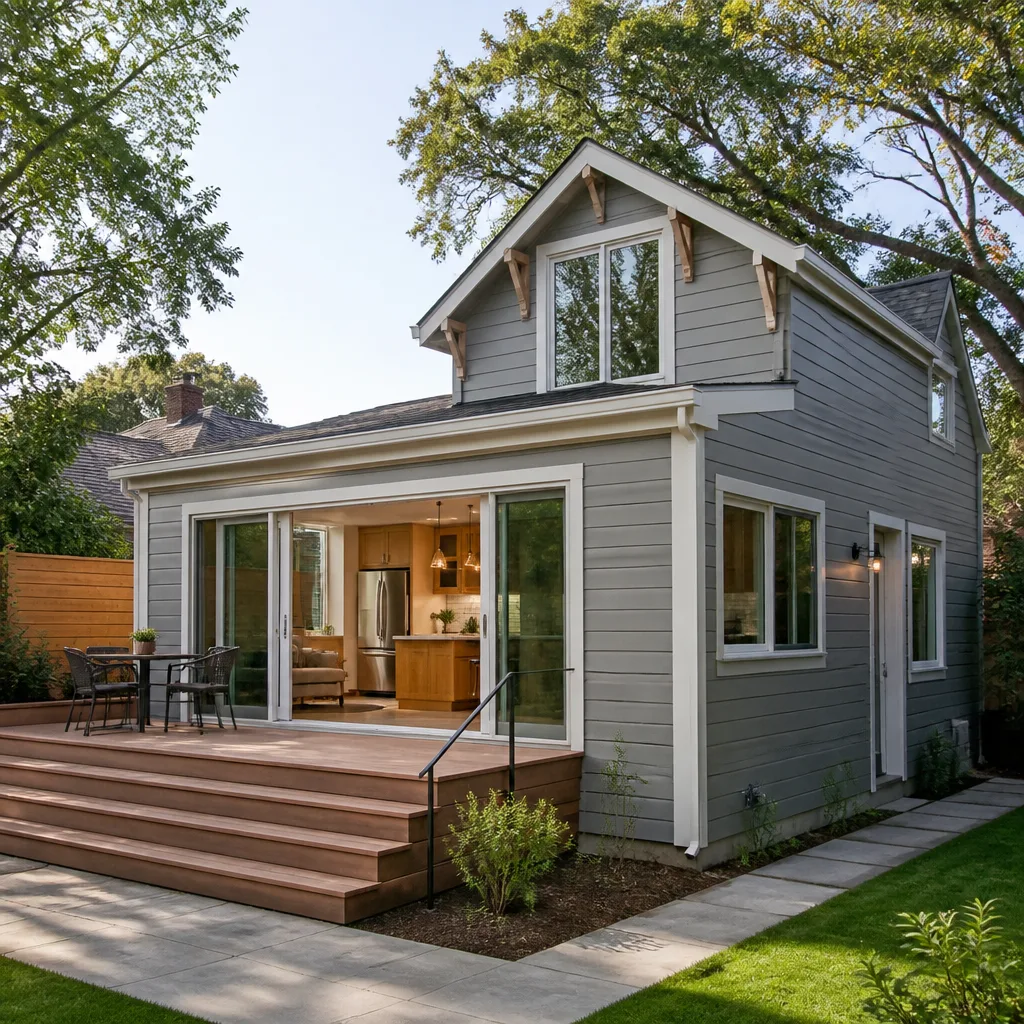
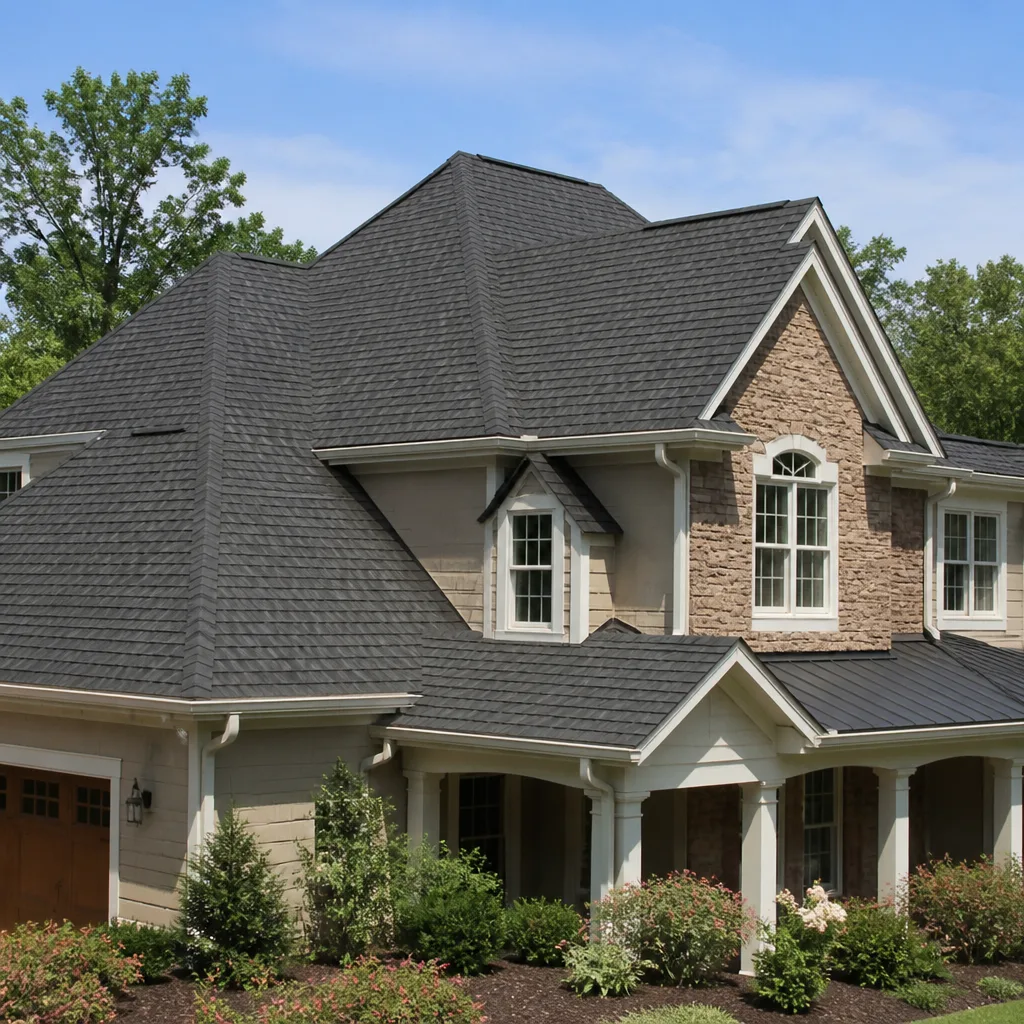
 Before
 After
After Before
 After
After Before
 After
AfterConstruction Cost Breakdown: The Redwood City Homeowner’s Reference for 2026
In a Redwood City kitchen remodel, the spread between a builder-grade and a mid-grade cabinet package from the same dealer - KraftMaid vs. Medallion, for example - is roughly $8,000 on a 200-square-foot kitchen. That single decision moves the total project budget more than any other line item. Yet most construction cost guides published for Bay Area homeowners cite ranges so wide they’re functionally useless: “$150 to $500 per square foot” describes nothing you can take to a lender or a spouse. This guide segments Redwood City project costs by trade, material tier, and permit category, using 2026 San Mateo County labor and material inputs so you can build a real budget line by line.
Quick Answer
A whole-home renovation in Redwood City in 2026 typically runs $280-$420 per square foot for finished space, while a targeted kitchen remodel falls between $75,000 and $145,000 depending on cabinet tier and appliance package. Add 15-20% contingency for pre-1980 homes, and budget $8,000-$18,000 for permits, engineering, and Title 24 compliance on any project altering structure or mechanical systems. The difference between a realistic estimate and a disappointing one usually comes down to whether soft costs and material tiers were specified in writing before work started - a topic we cover in depth in our DIY vs Professional Construction: The Redwood City Homeowner’s Decision Guide.
Table of Contents
- San Mateo County Labor Rates for 2026
- Material Tier Framework: What the Names Mean in Dollars
- Trade-by-Trade Cost Ranges in Redwood City
- Permits, Fees, and Soft Costs Nobody Lists
- Contingency Math: Why 10% Is Wrong for Older Homes
- How to Read a Bid for Cost-Shifting
- ADUs and Home Additions: A Separate Budget Reality
- Prefab and Modular Brands Worth Knowing
 Before
 After
AfterSan Mateo County Labor Rates for 2026
Labor is not a single line item. In Redwood City, a contractor’s bid reflects crew composition - the mix of journeyman, apprentice, and foreman hours - and the 2026 Bay Area market has compressed that mix upward. We have seen bids from competitors that appear competitive until you notice every hour is billed at apprentice rates for work that requires a foreman’s sign-off.
Here are the rates we are paying in San Mateo County this year, and what they mean for your project:
| Trade | Journeyman Rate | Foreman Rate | Typical Crew Mix |
|---|---|---|---|
| Framing / Rough Carpentry | $95-$105/hr | $110-$115/hr | 2 journeymen, 1 foreman |
| Licensed Electrical | $120-$135/hr | $140-$145/hr | 1 electrician, 1 apprentice |
| Plumbing | $130-$145/hr | $150-$155/hr | 1 plumber, 1 apprentice |
| HVAC | $110-$120/hr | $125-$130/hr | 1 technician, 1 helper |
| Drywall / Finish | $65-$75/hr | $85-$95/hr | 2 finishers |
| Tile Setting | $80-$95/hr | $100-$110/hr | 1 setter, 1 helper |
The crew composition matters because a foreman hour costs 15-30% more but may complete the task in 60% of the time. A bid that underweights foreman hours often overruns in calendar time, which costs you in temporary housing, extended loan interest, or simply living in a construction zone. Under Clause 1 of the Haven Standard, we specify crew composition in our written quotes so the rate structure is transparent before anyone picks up a tool.
Redwood City’s proximity to both San Francisco and Silicon Valley labor pools means rates run 8-12% above the Central Valley and 3-5% above the East Bay. Contractors drawing crews from Tracy or Modesto may quote lower labor, but drive time and fuel surcharges often erase the savings.
Material Tier Framework: What the Names Mean in Dollars
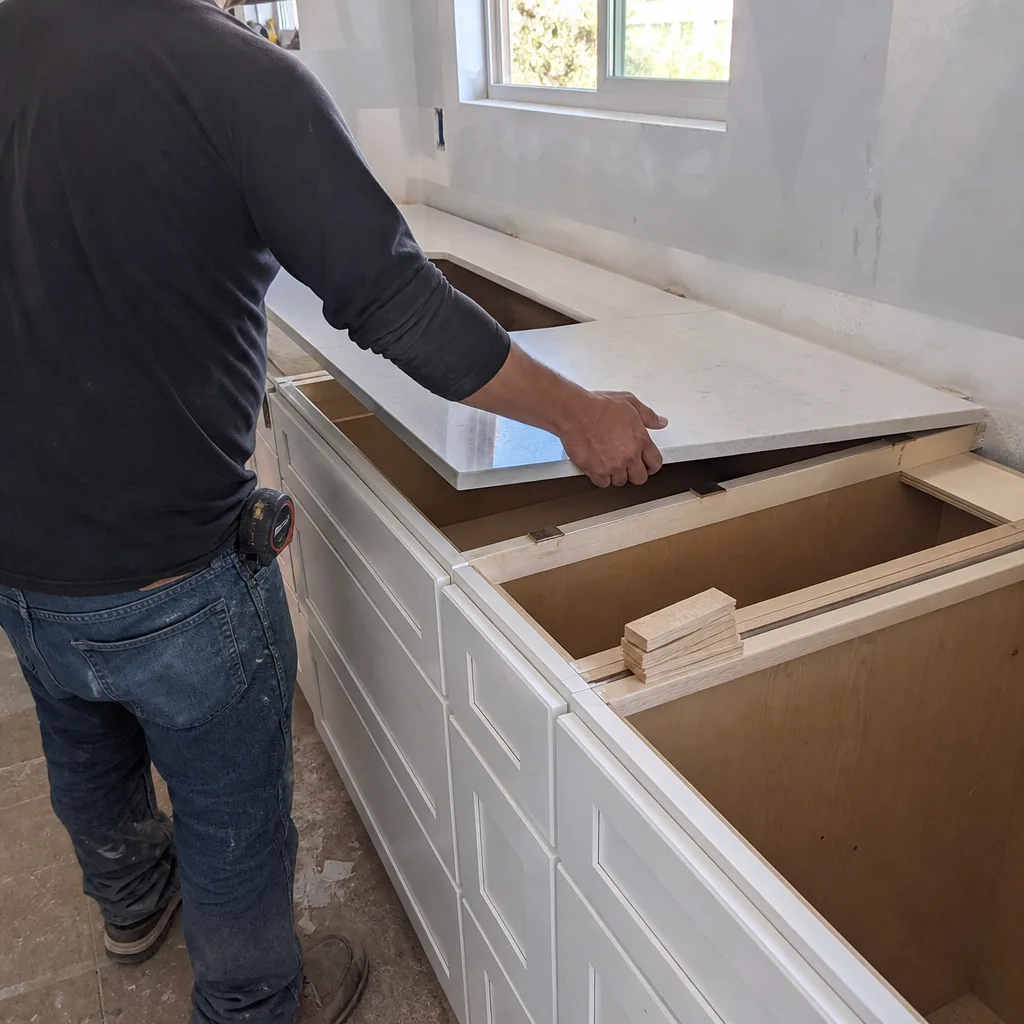
Fixture and finish allowances are where most budgets drift. A contractor who writes “tile allowance: $3,000” without specifying square footage, pattern, or grout type has transferred all selection risk to you. Here is how we tier materials at Rowan Construction Group Redwood City, with named brands and installed cost differences.
Plumbing Fixtures
| Tier | Examples | Product Cost (vanity faucet) | Installed Cost Premium |
|---|---|---|---|
| Entry | Moen Adler, Kohler Reach, Delta Foundations | $85-$140 | Baseline |
| Mid | Moen Align, Kohler Memoirs, Delta Trinsic | $280-$450 | + $180-$320 per fixture |
| Premium | Brizo Litze, Waterworks Henry, Kohler Purist | $650-$1,200 | + $480-$900 per fixture |
A Redwood City bathroom with two vanities, a tub/shower valve, and a toilet will carry a fixture spread of $1,800 to $7,500 depending on tier alone. The labor to install a premium fixture is often identical; the cost is in the product and the rough-in precision required.
Cabinets
- Entry stock: KraftMaid Vantage, Wellborn Estate - $180-$240 per linear foot installed
- Mid semi-custom: KraftMaid Canvas, Medallion Gold - $340-$480 per linear foot installed
- Premium custom: Plain & Fancy, Wood-Mode - $680-$1,100+ per linear foot installed
The $8,000 KraftMaid-to-Medallion spread we opened with assumes a 20-linear-foot kitchen with standard uppers and lowers. Add a pantry, island cabinetry, or interior organization upgrades and the gap widens.
Countertops
Quartz dominates Redwood City remodels because it performs well in our marine climate, where temperature swings are moderate but humidity can spike in winter. Cambria Brittanicca runs $95-$115 per square foot installed; Caesarstone Calacatta Nuvo runs $85-$105. Both are priced within 10% of each other, but Cambria’s domestic manufacturing has shortened lead times post-2023. Natural marble - Calacatta Gold, for example - runs $140-$220 installed but requires annual sealing and etching repair that most of our clients decline after year three.
Trade-by-Trade Cost Ranges in Redwood City
These ranges assume typical Redwood City homes: 1,200-2,400 square feet, built 1945-1995, with crawl space or partial basement access. Newer homes or hillside lots with engineered foundations will vary.
Kitchen Remodeling
Kitchen Remodeling in Redwood City represents our highest-volume trade. A full gut-to-studs remodel with layout change, permit-required electrical and plumbing, and mid-tier finishes:
- Entry tier: $65,000-$85,000 (stock cabinets, LVP flooring, basic appliances)
- Mid tier: $95,000-$135,000 (semi-custom cabinets, quartz counters, panel-ready appliances)
- Premium tier: $165,000-$245,000 (custom cabinets, professional ranges, built-in refrigeration)
The layout change is the hidden cost driver. Moving a gas line for a range relocation adds $2,800-$4,500 in Redwood City because PG&E requires a pressure test and permit. Moving a sink to an island adds $3,500-$6,000 for venting through a slab or crawl space. We specify these as line items in our written quotes, not surprises.
Bathroom Remodeling
Bathroom Remodeling in Redwood City costs scale with fixture count and wet-area complexity. A hall bath with tub-to-shower conversion runs $28,000-$42,000. A primary bath with curbless shower, freestanding tub, and dual vanity runs $68,000-$110,000.
Redwood City’s older neighborhoods - Mount Carmel, Farm Hill, and the Woodside Plaza area - often have 32-inch doorways and 5-foot tubs that constrain layout options. Widening a doorway to accommodate aging-in-place or modern fixtures adds $1,800-$3,200 per opening when structural headers are required; see our Construction Warning Signs: A Redwood City Homeowner’s Reference Guide for additional red flags to watch for.
Roofing
Roofing in Redwood City costs are driven by tear-off layers, sheathing condition, and access. A composition shingle roof on a single-story home with walkable pitch:
- One-layer tear-off, sound sheathing: $8.50-$11.50 per square foot
- Two-layer tear-off, partial sheathing replacement: $12.50-$16.00 per square foot
- Full sheathing, upgraded underlayment (GAF FeltBuster + WeatherWatch): $14.00-$18.50 per square foot
Redwood City’s mature tree canopy in Emerald Hills and Edgewood Park means debris accumulation and moss growth that accelerates shingle deterioration. We document sheathing condition with photos before tear-off, included as standard, so homeowners see why a $3,200 sheathing upgrade was necessary rather than optional.
Windows and Doors
Retrofit window replacement in existing openings runs $850-$1,400 per opening for vinyl, $1,200-$1,900 for fiberglass, and $1,800-$2,800 for clad wood. New construction windows in an addition or full-gut remodel add $180-$320 per opening for nail-fin installation and trim integration.
Title 24 compliance requires NFRC-rated U-factor and SHGC values for all replacement windows in California. Most Redwood City homes benefit from U-factor 0.30 or lower and SHGC 0.25 or lower for west-facing elevations that take afternoon sun. The rating label, not the brand name, determines permit approval.
Home Additions and ADUs
See the dedicated section below for full ADU and addition economics.
Permits, Fees, and Soft Costs Nobody Lists
Contractor estimates often show permit fees as a single line item: “$3,500 permits.” In Redwood City, that number is incomplete at best and misleading at worst. Here is what a realistic soft-cost budget looks like for a 400-square-foot addition or substantial remodel, including details on Construction Permits, Codes & Inspections in CA: What You Need to Know.
| Line Item | Cost Range | When Required |
|---|---|---|
| City of Redwood City building permit | $3,200-$6,800 | Any structural, electrical, or plumbing work beyond cosmetic |
| Plan check fees | $1,400-$2,800 | All projects requiring engineered plans |
| School impact fees (San Mateo County) | $3.80-$4.20 per sq ft | New construction and additions >500 sq ft |
| Title 24 energy compliance report | $800-$1,200 | All projects altering envelope or mechanical |
| Structural engineering (beam calcs) | $2,500-$5,500 | Wall removal, beam spans >12 feet, hillside |
| Soils or geotechnical report | $3,500-$8,000 | Hillside, fill, or suspected expansive soils |
| Survey (property lines, setbacks) | $1,800-$3,200 | Additions, ADUs, or disputed boundaries |
| Architectural plans (full set) | $8,000-$18,000 | Design-build or owner-architect-contractor |
The Title 24 report is a third-party deliverable from a compliance firm such as Energy Code Ace or a local HERS rater. It is not negotiable, and it is not included in most contractor bids unless specifically stated. At Rowan Construction Group Redwood City, we line-item this because it is a real cost that arrives after permit submission and before approval.
Redwood City’s planning department operates under San Mateo County’s unified building code with local amendments for hillside development and flood zones. Properties west of El Camino Real in the FEMA AE zone require additional elevation certificates for additions, adding $1,200-$2,000 and 2-4 weeks to permitting.
Contingency Math: Why 10% Is Wrong for Older Homes
The standard advice - “budget 10% contingency” - applies to cosmetic renovations in homes built after 1990. In Redwood City, where the median home age is 1962 and significant neighborhoods date to the 1940s and 1950s, that advice is dangerous.
Here is what we have found in our project records, documented with photos on every visit:
- Asbestos-containing materials: Pre-1980 homes in Redwood City have a documented incidence of 35-45% for ACM in flooring mastic, duct insulation, or popcorn ceiling texture. Testing costs $400-$800; abatement runs $15-$25 per square foot for contained removal. A kitchen with 200 square feet of VAT (vinyl asbestos tile) under two layers of later flooring adds $3,000-$5,000.
- Knob-and-tube wiring: Active K&T exists in roughly 25% of pre-1955 Redwood City homes we have worked on. It is not inherently unsafe if undisturbed, but any wall opening triggers code-required replacement. Budget $8,500-$14,000 for selective rewiring of a kitchen or bath circuit.
- Galvanized plumbing: Water supply lines in homes built 1940-1965 are often galvanized steel with 50-60 year service lives. Replacement with copper or PEX adds $4,500-$8,500 for a two-bathroom home.
- Non-compliant foundations: Redwood City’s Farm Hill and Friendly Acres neighborhoods include homes on unreinforced masonry or stepped foundations that do not meet current shear-wall requirements for open floor plans. Engineering and retrofit adds $12,000-$28,000.
For projects opening walls in pre-1980 homes, we specify 15-20% contingency in our written quotes, with a signed change-order protocol for any discovery. Under the Haven Standard, no work proceeds on a change until the change order is signed - the administrative discipline that has kept our projects within a few percent of the agreed cost across 4,000-plus jobs.
How to Read a Bid for Cost-Shifting
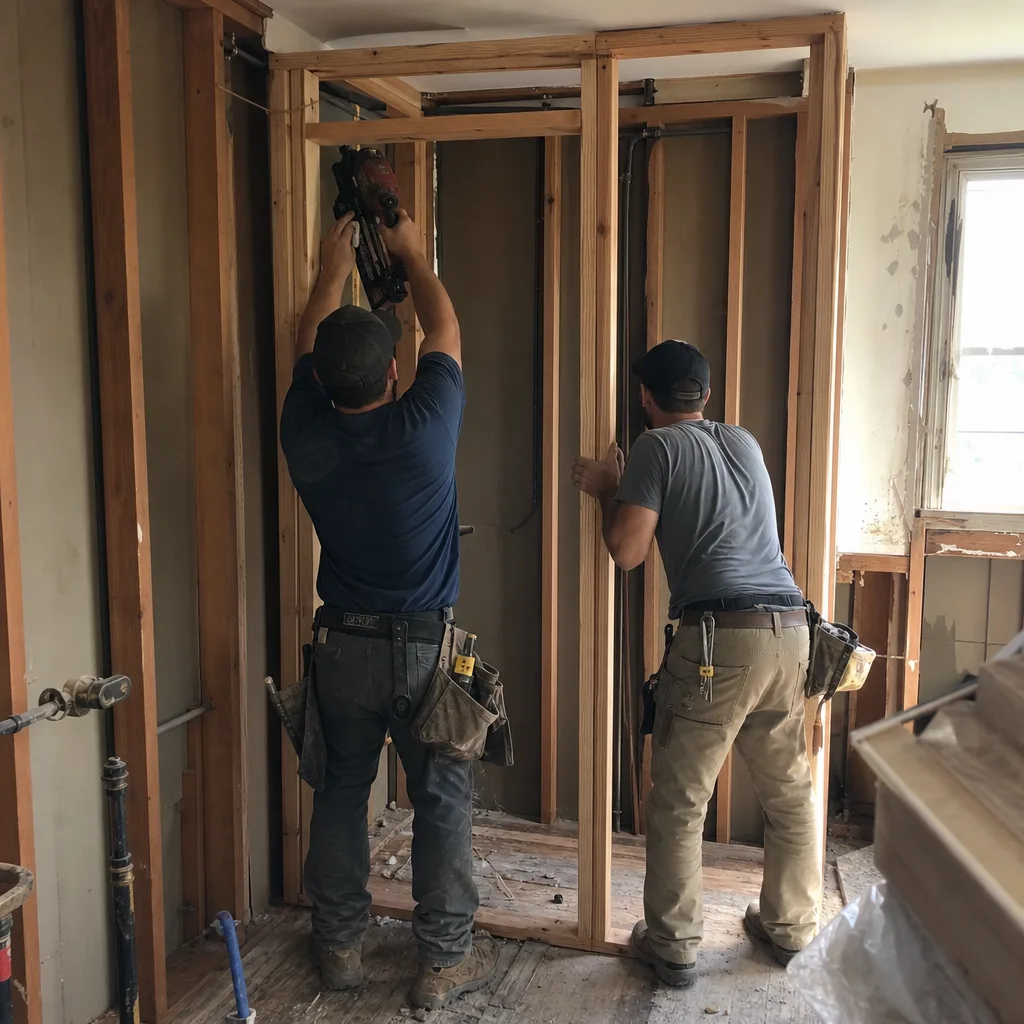
Not all low bids are dishonest. Some are simply structured to transfer risk. Here are five cost-shifting techniques we review with clients who bring us competitor estimates for our Free Second Opinion on Any Written Estimate.
- Allowance below market: A “tile allowance: $3,000” for a 60-square-foot shower with floor-to-ceiling porcelain and a niche assumes $5 per square foot product cost. Actual mid-tier tile runs $8-$14, plus $12-$18 installation. The homeowner discovers the gap at selection, when emotions are invested and the contractor holds leverage.
- Labor-only framing: A bid that shows “framing: $8,500” without specifying lumber grade, engineered beam vs. solid sawn, or hardware (Simpson Strong-Tie vs. generic) leaves $2,000-$4,000 of material ambiguity.
- Excluded permit costs: “Permits by owner” or “permit costs TBD” means the contractor has not priced plan-check revisions, inspection re-dos, or utility coordination. In Redwood City, a single failed inspection can add $800-$1,500 in re-inspection fees and delay.
- Unspecified appliance handling: “Appliances by owner” without delivery, uncrating, and connection specifications leaves you coordinating three trades on delivery day. We include appliance integration in our scope because a panel-ready refrigerator requires 1/8-inch clearance precision that a delivery crew does not provide.
- Missing cleanup and protection: Daily jobsite cleaning, HVAC protection during demolition, and final cleaning are real costs. Their absence from a bid means either corner-cutting or a surprise addendum.
The antidote is a written scope with line-item pricing and material specifications by brand and model where selection affects labor. That is Clause 1 of the Haven Standard: the price is written before anyone starts.
ADUs and Home Additions: A Separate Budget Reality
Accessory Dwelling Units and home additions in Redwood City operate under a cost structure distinct from interior remodeling because they trigger full building code compliance, utility separations, and often fire-sprinkler requirements.
A detached ADU in Redwood City in 2026:
- 400 sq ft studio: $185,000-$265,000 all-in (design, permit, construction, utility tie-in)
- 650 sq ft one-bedroom: $280,000-$385,000 all-in
- 850 sq ft two-bedroom: $365,000-$495,000 all-in
These figures assume flat or gently sloped lots with standard soils. Hillside construction in Emerald Hills or Farm Hill with retaining walls, engineered foundations, and extended utility runs adds 25-40%.
The cost drivers that surprise most Redwood City homeowners:
- Utility capacity: PG&E service upgrades from 100A to 200A run $4,500-$8,500 if the transformer has capacity; $12,000-$22,000 if trenching or transformer upgrade is required. We verify this before quoting.
- Fire sprinklers: California’s 2019 adoption of NFPA 13R for ADUs adds $6,500-$11,000 for a standalone system with dedicated meter, or connection to the main residence system if capacity allows.
- Sewer lateral: Redwood City requires video inspection and replacement if the lateral is Orangeburg, clay with root intrusion, or more than 40% deteriorated. Replacement runs $8,500-$16,000 for trenchless methods, $12,000-$24,000 for open cut.
Prefabricated ADU options from Plant Prefab or Mighty Buildings can reduce construction duration by 30-50% but rarely reduce total cost below $165 per square foot installed in the Bay Area market. The savings are in time and weather risk, not material. Boxabl and Tuff Shed offer lower entry points but require careful zoning verification - Redwood City’s ADU ordinance has minimum ceiling heights, setback requirements, and design standards that some modular products do not meet without site modification.
Prefab and Modular Brands Worth Knowing
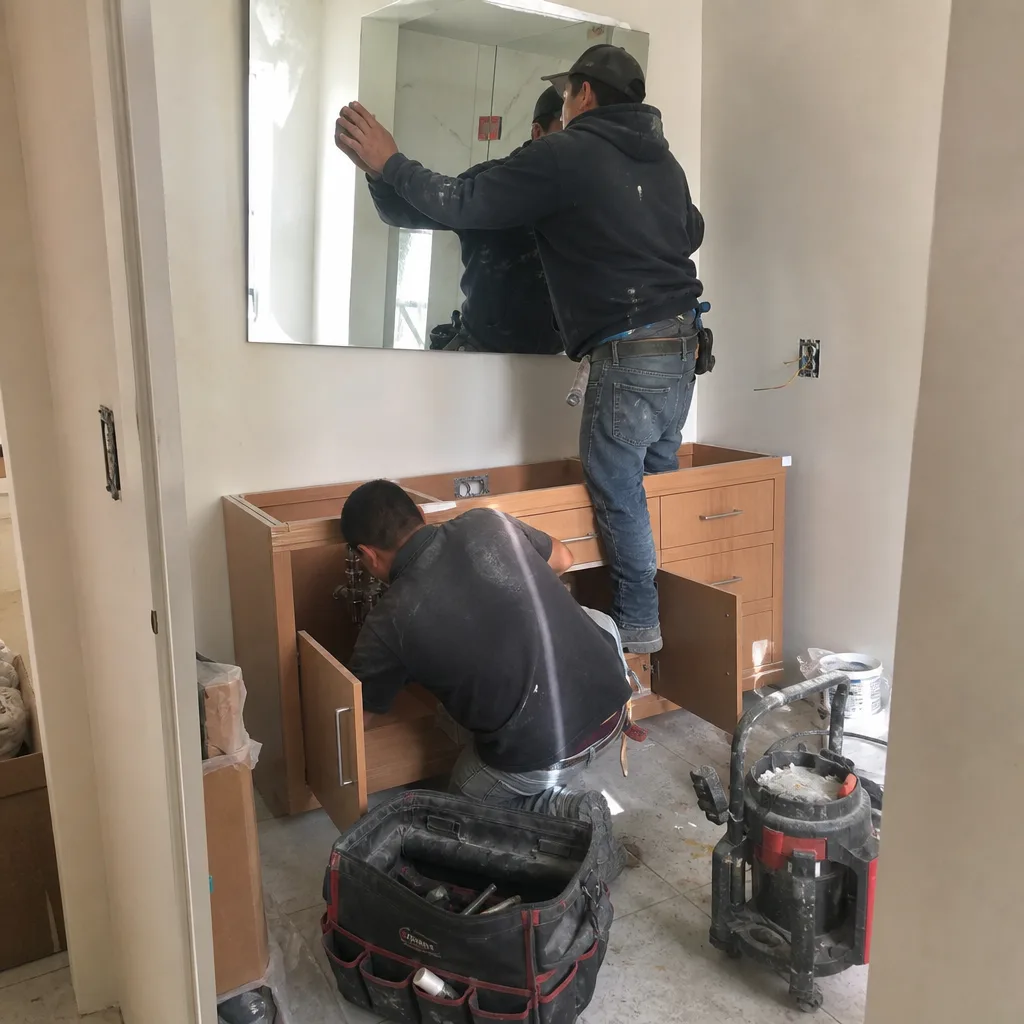
For homeowners considering ADUs or detached offices, four brands appear regularly in our feasibility reviews:
- Plant Prefab: Customizable panelized construction manufactured in Rialto, CA. Lead times 8-14 weeks. Works well for Redwood City’s design-review requirements because exterior finishes are field-applied to match primary residence.
- Mighty Buildings: 3D-printed polymer composite panels with integrated MEP rough-ins. Faster assembly, limited exterior finish options. Best for modern aesthetic compatibility in hillside or view-lot settings.
- Boxabl: Foldable room modules at aggressive price points. Zoning compliance varies by jurisdiction; Redwood City has approved two Boxabl ADUs in 2024-2025 with foundation modifications and fire-sprinkler integration.
- Tuff Shed: Pro Studio and Premier Pro lines for detached offices or studios under 120 square feet (no permit trigger in Redwood City). Larger structures require full ADU compliance.
We do not resell these products; we provide site prep, foundation, utility tie-in, and finish integration. The value of a prefab unit is in factory quality control; the risk is in assuming the factory price includes everything needed for legal occupancy in Redwood City.
Common Mistakes to Avoid
- Using national cost-per-square-foot averages. A national average includes Wichita and Phoenix. Redwood City’s labor rates, permit fees, and seismic requirements produce costs 40-60% above national medians for equivalent scope.
- Skipping the soils report on hillside lots. Two homes on the same Farm Hill street can have radically different foundation requirements based on cut-and-fill history. The $4,500 soils report prevents a $28,000 foundation surprise.
- Accepting “allowance” pricing without material specifications. An allowance is a contractor’s guess, not a commitment. Demand brand names, model numbers, and installed quantities.
- Underestimating Redwood City’s plan-check timeline. The city is efficient by Bay Area standards, but a complex addition still requires 6-10 weeks for initial review and 2-4 weeks for corrections. Start permit applications before finalizing financing draws.
- Ignoring school impact fees in addition budgets. At $4 per square foot, a 500-square-foot addition adds $2,000 that many online calculators omit entirely.
- Assuming a “design-build” contractor includes architectural plans. Some do; many subcontract plans at cost-plus. Clarify whether the quoted fee includes plan development, or if that is a separate $8,000-$15,000 engagement.
- Neglecting to verify license and insurance directly. CSLB license status changes; policies lapse. We provide our license number on every page and encourage verification. Any contractor who resists this check is one to avoid.
When to Call a Professional
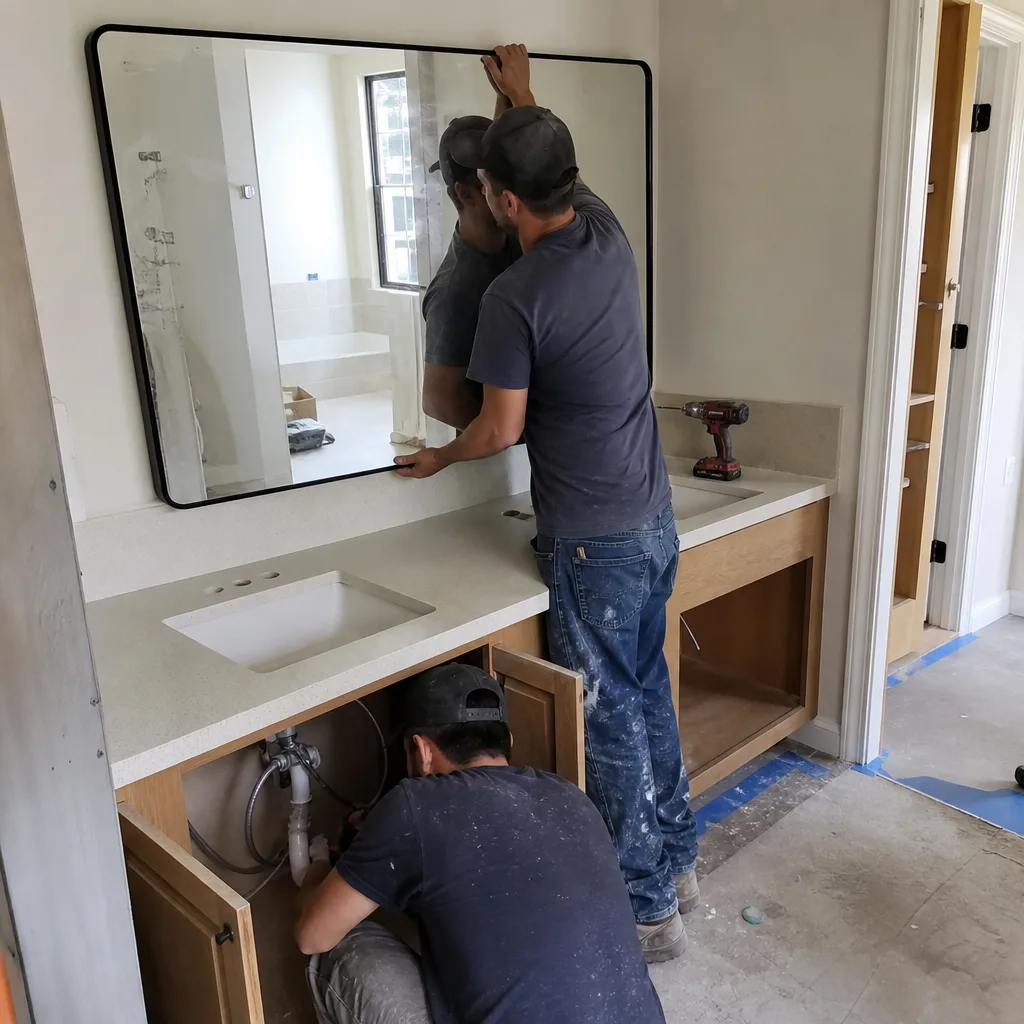
Call a licensed contractor when your project involves structural modification, electrical or plumbing relocation, or permitting - which describes most Redwood City renovations beyond painting and flooring. For more guides & resources, visit our blog. The cost of professional engagement is recoverable through accurate budgeting, code compliance, and warranty protection. Rowan Construction Group Redwood City offers free estimates in Redwood City. We will review your plans or your existing conditions, deliver a written price with line-item scope, and provide a Free Second Opinion on any competitor’s written estimate. Call (650) 560-7228 to schedule.
Frequently Asked Questions
A full kitchen remodel in Redwood City ranges from $65,000 for entry-tier stock cabinets and basic appliances to $245,000 for premium custom cabinetry and professional-grade equipment. Most mid-tier projects with semi-custom cabinets, quartz counters, and quality appliances fall between $95,000 and $135,000. Call (650) 560-7228 for a written quote on your specific layout - estimates are free.
At Rowan Construction Group Redwood City, no work proceeds on a change until the change order is signed. This is the Haven Standard discipline that has kept our projects within a few percent of the agreed price since 2007. The only price changes occur when you request a scope change, or when concealed conditions (asbestos, knob-and-tube wiring, compromised sheathing) are discovered and documented with photos. We specify contingency percentages in our written quotes for this purpose.
Yes. We pull all required permits, coordinate inspections, and deliver passed inspection records as part of our standard documentation package. The permit cost is line-itemed in your written quote, not buried in overhead. In Redwood City, we have established relationships with plan checkers and inspectors across building, electrical, plumbing, and mechanical divisions, which reduces revision cycles.
A hall bathroom remodel takes 4-6 weeks from demolition to final inspection. A full kitchen remodel with layout changes takes 10-14 weeks. Additions and ADUs require 4-6 months for construction after permit approval, which itself takes 2-4 months in Redwood City depending on complexity. We provide a written schedule with milestones before work starts, updated weekly with photo documentation.
The Haven Standard is the operating system Rowan Construction Group has used since 2007. Clause 1 requires a written price before any work starts. Clause 2 requires a signed change order before any scope change proceeds. The 365-Day Done Right Promise states that if it is not done right, we make it right - backed by a terms page, not an asterisk. Every project receives a documented photo record as standard, not an upgrade.
Asbestos-containing materials cannot be identified visually; laboratory analysis of a bulk sample is required. Knob-and-tube wiring is visible in unfinished attics, basements, or crawl spaces as ceramic tubes through joists and ceramic knobs securing single conductors. If your home was built before 1980, budget for testing and inspection in your preliminary planning. We include ACM testing in our pre-construction checklist for older Redwood City homes and document findings with photos before any wall opening.
The Bottom Line
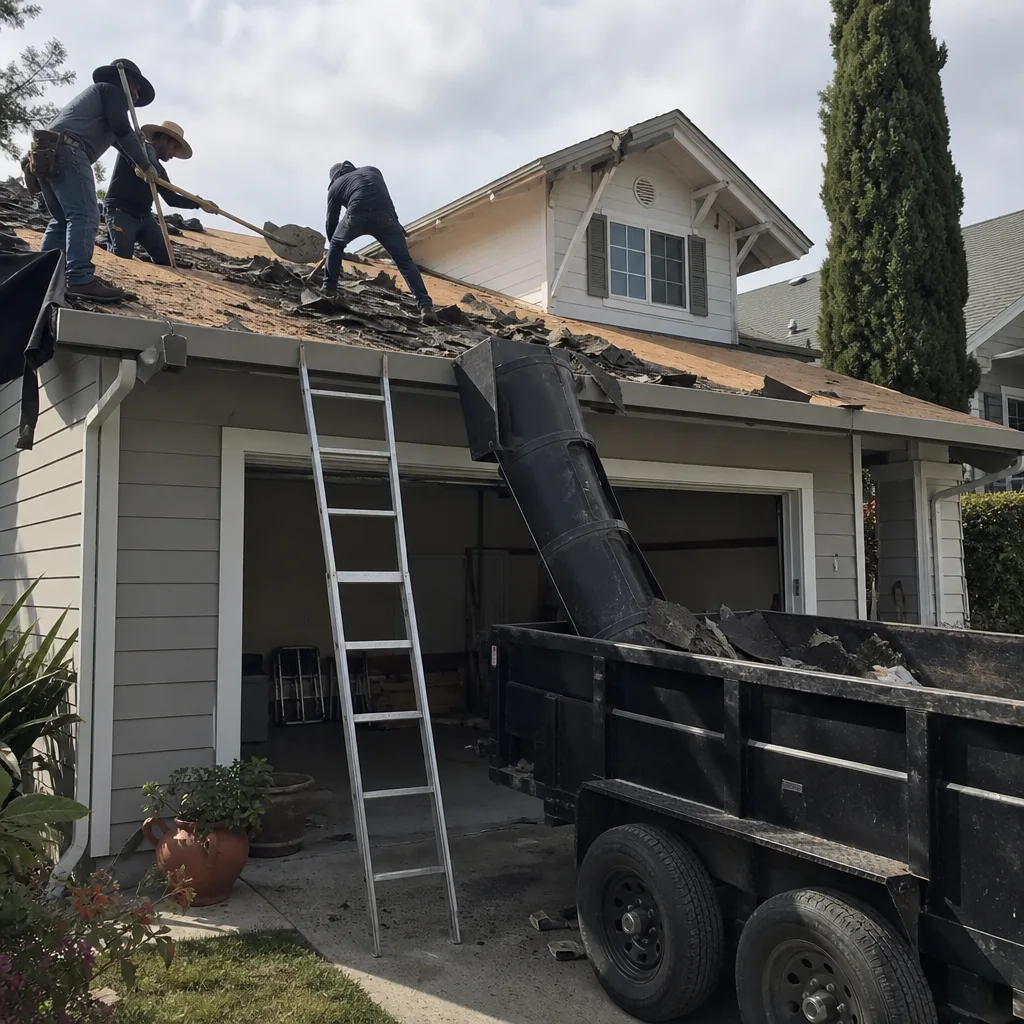
Construction costs in Redwood City are knowable, specifiable, and controllable - but only with documentation discipline that most contractors do not practice. The difference between a $95,000 kitchen that finishes at $102,000 and one that finishes at $135,000 is usually not the tile selection; it is the absence of written scope, signed change orders, and contingency planning for the conditions hidden in pre-1980 walls. Rowan Construction Group Redwood City home has delivered 4,000-plus projects since 2007, every one with a written price before work started and a documented record when the crew left. The numbers in this guide reflect what we are paying for labor, materials, and compliance in 2026. Use them to build a budget that survives contact with reality.
Written by Grant Rowan, Owner at Rowan Construction Group Redwood City, serving Redwood City since 2007.